July 6, 2026 · Modality
7 Best Eventbrite Alternatives for 2026 (Compared)
Eventbrite sells tickets and hands you a spreadsheet. If you want to own your audience and your data, here are the best Eventbrite alternatives for 2026.
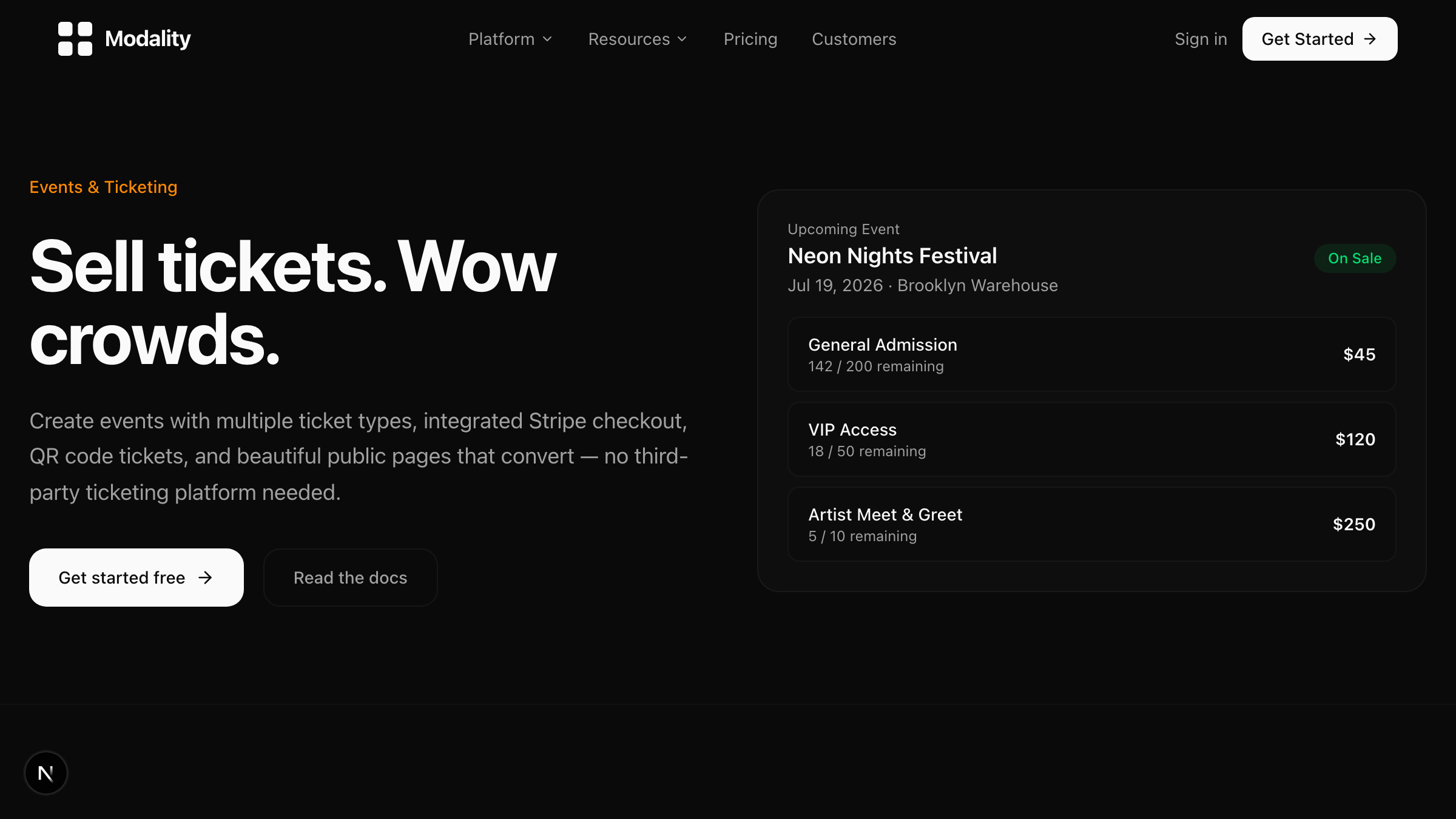
The best Eventbrite alternatives in 2026 fall into three camps: own-your-audience all-in-one platforms like Modality, modern niche ticketing tools, and simple checkout links. The right pick depends on whether you just want to sell a ticket or you want to keep the audience, the data, and the relationship after the event ends.
People rarely leave Eventbrite because it cannot sell a ticket. They leave over fees and ownership. Below is an honest look at why, what to look for in a replacement, and how the main categories of Eventbrite competitors actually compare, including where each one is genuinely the better call.
Why do people look for Eventbrite alternatives?
Two reasons come up again and again.
First, Eventbrite fees. Service fees stack on top of payment processing and get passed to your buyer or eaten by you. On a low-margin community event or a nonprofit fundraiser, that spread is the difference between breaking even and losing money. If fees are your main pain, start with our guide to selling event tickets without fees.
Second, and more important long term: you do not own the audience or the data. On a marketplace, your buyers are the platform's users. You get a limited export, discovery is controlled by the platform, and there is no easy way to build a lasting relationship with the people who show up. That is fine if you sell one event a year. If your business depends on repeat attendance, renting your audience is a strategic problem. We go deep on this in own your audience and first-party data.
Other common triggers: limited branding, a checkout that pulls buyers off your site, weak marketing tools, and no CRM to remember who attended what.
What should you look for in an Eventbrite alternative?
Before comparing tools, get clear on what actually matters for your situation:
- Total cost per ticket. Add service fees plus payment processing. A lower headline rate with a hidden per-ticket fee can cost more.
- Audience ownership. Can you export full contact data, and does the buyer stay in your ecosystem instead of the platform's?
- Branding and checkout. Does checkout happen on your own event page, or does the buyer get redirected to a marketplace?
- Marketing and CRM. Can you segment past attendees and email or text them, or do you export to a separate tool every time?
- Data model. Does it remember attendance history across events, or treat every event as a fresh, disconnected list?
- Payouts and control. How fast do you get paid, and do funds route straight to your own processor?
With that lens, the alternatives sort cleanly into three categories.
What are the main types of Eventbrite alternatives?
1. Own-your-audience all-in-one platforms (like Modality)
These combine ticketing with a CRM, forms, and campaigns so the sale and the relationship live in one place. Every ticket buyer becomes a contact with attendance history, and you can market to them directly afterward.
Pros: you own the audience and first-party data; checkout happens on your own branded event pages; ticket sales flow straight into a CRM you control; you can run email, SMS, and social campaigns to past attendees; automations handle reminders and follow-up. It replaces a whole stack (marketplace plus email tool plus spreadsheet) with one workspace.
Cons: you do not get a big public marketplace pushing discovery traffic to your event, so you bring your own audience. That is the trade: less rented reach, full ownership. For most producers and venues with a repeat audience, that trade is worth it. Modality sits here, pairing Stripe checkout, QR-code tickets, and promo codes with a real CRM and automations.
2. Modern niche ticketing tools
These are focused, well-designed ticketing products built for specific event types (music, community, tech). They often have cleaner buyer flows and fairer fees than legacy marketplaces.
Pros: lower or transparent fees; slick checkout; features tuned to their niche; usually let you export attendees. Cons: they stop at ticketing. You still need a separate CRM, email tool, and forms, so you are back to syncing data between systems. Great if ticketing is your only gap and you already have marketing handled elsewhere.
3. Simple checkout and payment tools
Payment links and lightweight commerce tools can sell a "ticket" as a product or a paid form entry. Think of this as the minimalist option.
Pros: dead simple, cheap, fast to set up, money hits your account directly. Cons: no real ticketing (no QR check-in, ticket types, or attendee roster out of the box), no CRM, no marketing. Fine for a one-off workshop with 20 seats; it breaks down the moment you need capacity control, promo codes, or repeat-attendee tracking.
A quick way to decide: if you only need to collect payment, a checkout tool works. If you need proper ticketing but market elsewhere, a niche tool fits. If you want the audience to be yours forever, an all-in-one platform wins.
Which alternative fits your use case?
A music venue with weekly shows
A venue running five shows a week lives or dies on repeat attendance. It should never rent its audience. An own-your-audience platform lets the venue tag buyers by genre, see who has attended multiple nights, and text regulars a presale link before general sale. The CRM turns one-time buyers into a mailing list the venue actually controls.
A workshop host
Someone running a monthly 25-seat workshop needs capacity limits, a clean checkout, and an easy way to email past students about the next session. A niche ticketing tool covers the sale, but an all-in-one shines here because pay-enabled event pages plus a contact list of past attendees means the next workshop fills from people who already came.
A nonprofit gala
A gala cares about margin and donor relationships. Every dollar lost to fees is a dollar not raised, so transparent pricing matters. Just as important, the org wants to keep donor contact data to steward relationships year-round, not hand it to a marketplace. An all-in-one platform with owned data and low ticketing overhead fits best; you can weigh the numbers on the pricing page.
How do you switch from Eventbrite?
Migrating is straightforward if you do it between events:
- Export your attendee data. Download your full contact and order history from Eventbrite while you still have access.
- Set up your new event page. Recreate your next event with ticket types, promo codes, and checkout on your own branded page.
- Import past attendees. Load your exported contacts into the CRM so history follows people into the new system.
- Redirect your links. Point your website, bio links, and socials to the new event page.
- Announce it. Email your list from the new platform so future engagement data lands in one place.
- Run one event fully on the new tool. Confirm checkout, check-in, and reporting before you retire Eventbrite completely.
Keep the export as a backup until you have run a full cycle. Once your first-party data is in a system you own, you never have to rebuild your audience again.
Frequently asked questions
Are there free Eventbrite alternatives?
Yes. Several platforms, including Modality, offer free plans for events; on paid tickets you typically pay a small platform fee plus card processing (on Modality that platform fee is 1.9% on Free, dropping to 0.9% on Pro and 0.5% on Business). Always compare total cost per ticket, including any service fees, not just the monthly price.
What is the cheapest way to sell event tickets?
The cheapest setup avoids stacked service fees and passes only payment processing to the buyer. Platforms that run checkout on your own Stripe account tend to be the most cost-effective; see our guide on selling tickets without fees.
Which Eventbrite alternative is best for repeat events?
An own-your-audience all-in-one platform. Because every ticket buyer becomes a contact with attendance history, you can market to past attendees and fill future events from people who already came.
Can I move my past attendees off Eventbrite?
Yes. Export your attendee and order data, then import it into your new platform's CRM so historical relationships carry over instead of starting from scratch.
Want to sell tickets and actually keep the audience you build? Start free with Modality and run ticketing, your CRM, and campaigns from one platform you own.
Run it all in one place
Modality brings your CRM, ticketing, forms, payments, and marketing together, with AI that sets it up for you.
Start free