July 22, 2026 · Modality
How to Own Your Audience with First-Party Data
Third-party cookies are going away. The businesses that win are the ones that own their audience data across every ticket, form, and email. Here is how to build that.
To own your audience with first party data for events, you need to capture attendee information directly through your own pages, forms, and checkout, then keep it in one CRM record you control, rather than renting access to your customers through a marketplace. As third-party cookies disappear and platforms tighten their grip, first-party data is the difference between a business you own and an audience you borrow. This guide covers why that matters now, exactly where experience businesses lose their data, and how to capture, keep, and monetize it.
Why does first party data for events matter now?
First-party data is information your customers give you directly: their name, email, what they bought, which events they attended, what they said they wanted. It matters more than ever for a simple reason. The old model of reaching people through third-party cookies and rented platform audiences is collapsing, and what replaces it is data you collected and own outright.
Third-party cookies, the tracking that let advertisers follow people around the web, are being phased out across browsers, and privacy rules keep tightening. When that targeting disappears, the businesses left standing are the ones with a direct line to their audience. A first-party data strategy is not a compliance chore; it is the most durable competitive advantage you can build, because nobody can take it away or change the algorithm on you.
There is also zero-party data, a close cousin worth naming. That is information customers intentionally share, like preferences, interests, or a survey answer. First-party data is captured from behavior (they bought a ticket); zero-party data is volunteered (they told you they prefer weekend shows). You want both, and owning your channels is how you collect them.
Where do experience businesses lose their data?
Here is the uncomfortable truth: most event and experience businesses give their most valuable asset away without realizing it. The leak is almost always the same one.
- Selling through marketplaces. When you sell tickets on a big marketplace, the buyer is often the platform's customer, not yours. You may get a name and a masked email, but the relationship and the richest data belong to them.
- Relying on social followers. Followers are rented. A platform change or a suspended account can erase your entire "audience" overnight, and you cannot export a follower list into a CRM.
- Scattering data across tools. Even when you do collect data, it fragments across a ticketing tool, an email app, and a spreadsheet, so no single record represents a real person.
- Not capturing at the moment of intent. The strongest signal, someone buying or registering, passes through a third party and you never bank it.
The pattern is clear: audience data ownership erodes every time a middle layer sits between you and your customer. The fix is to remove the middle layer wherever it touches the moment of purchase or sign-up.
How do you capture and keep your first-party data?
Owning your audience is not complicated, but it does require running the key moments on your own turf. The goal is that every interaction writes back to one record you control.
Run purchases on your own pages
Sell through your own event pages and checkout, not just a marketplace listing. When the buyer transacts on a page you own, you capture the full contact and order details as your first-party data. A platform like Modality lets you publish public event pages with native checkout, so the sale and the customer record are yours from the first click.
Capture at every touchpoint with forms
Use your own forms for inquiries, waitlists, RSVPs, and preferences. Every submission is a chance to collect both first-party and zero-party data, especially if you ask one preference question. Conditional forms let you gather the right detail without a long, abandoned questionnaire.
Keep it in one CRM record
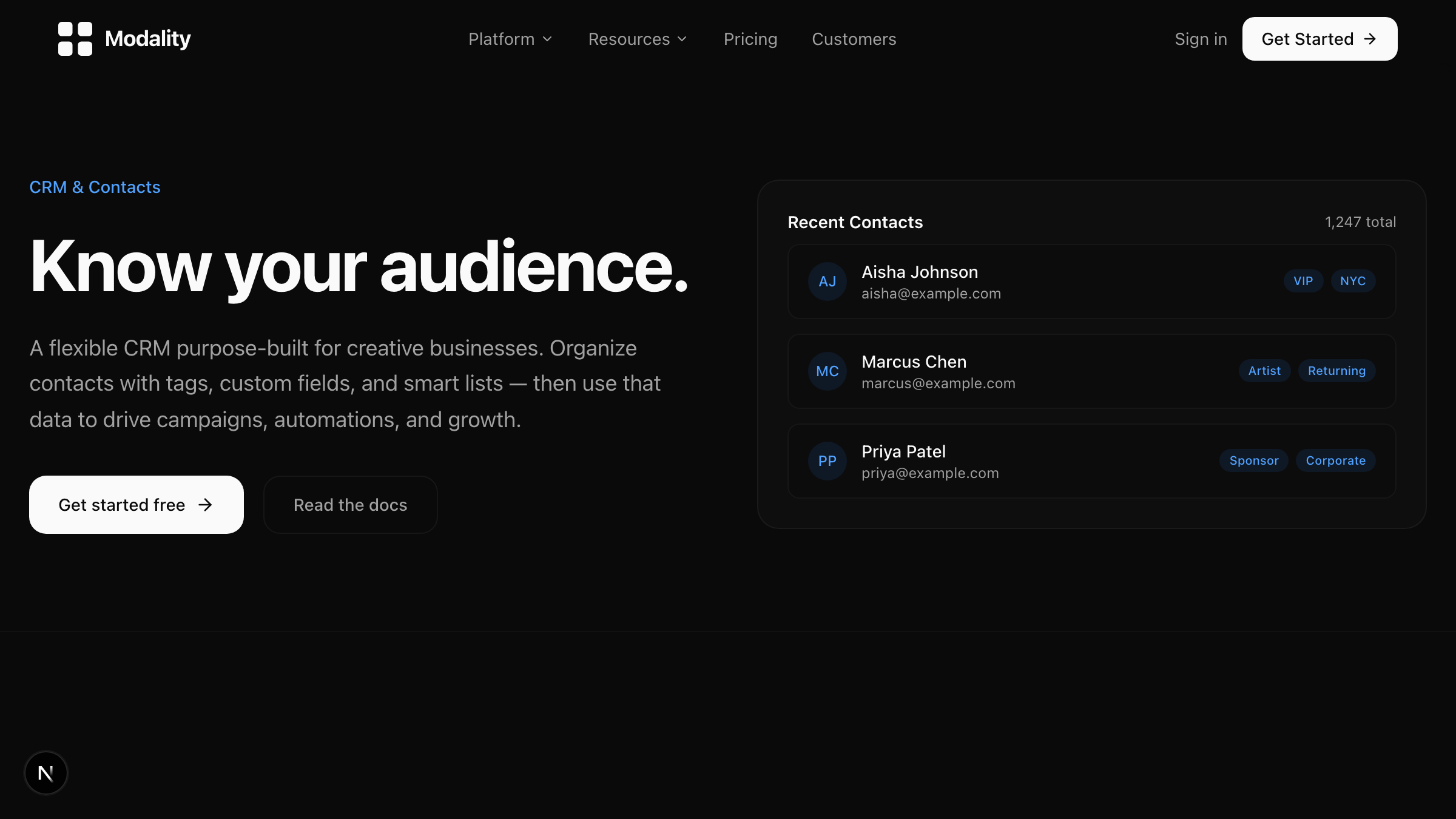
Capture is only half the job; retention is the other half. All of it should flow into one CRM record per person so the ticket buyer, the newsletter subscriber, and the form respondent are recognized as the same human. This is the entire point of a flexible CRM: to be the durable home for your audience data. If you are new to the concept, our overview of what an event CRM is lays out why a single record changes everything.
How do you turn first-party data into repeat revenue?
Owning the data is worthless if it sits idle. The payoff comes from segmentation and automation that turn a one-time attendee into a repeat customer. Here is the practical sequence.
- Segment by real behavior. Group people by what they actually did: past attendees, VIP spenders, no-shows, a specific city. Real behavior beats guesswork every time.
- Automate the follow-up. Trigger a thank-you and a next-event invite automatically after each event, while interest is hot. A good automation engine makes this fire without you lifting a finger.
- Re-engage the quiet ones. Build a segment of people who have not attended in six months and send a targeted win-back offer.
- Reward your best customers. Give repeat buyers early access or a members-only rate. Owning the data is what lets you recognize them in the first place.
- Measure and refine. Track which segments actually convert so you invest in the audiences that pay you back. Our guide to tracking event ROI shows how to connect spend to revenue.
This is the flywheel. First-party data feeds segments, segments feed automations, automations drive repeat revenue, and every new event adds more data to the pile. Marketplaces cannot offer this because they, not you, own the relationship.
Use case: a creator
An independent creator running ticketed workshops had thousands of social followers but no way to reach them off-platform. By moving sign-ups to their own registration page, they built an email list of buyers they actually owned. When an algorithm change tanked their reach, the direct list kept selling out workshops because the audience was theirs, not the platform's.
Use case: a venue
A live-music venue had years of ticket sales locked inside a marketplace and almost no usable customer data. After moving ticketing onto their own pages, every sale created a real contact tagged by show and genre. Within a few months they could email jazz-night regulars about the next jazz booking, and repeat attendance climbed. The approach is covered further in our piece on CRM for venues.
Use case: a brand running pop-ups
A retail brand ran city pop-ups but only knew foot traffic, not who showed up. By gating entry and offers behind a quick form, they captured attendees as first-party data with location and interest tags. That data turned one-off pop-up visitors into an owned audience they could invite to the next city, so each event compounded the last instead of starting from zero.
What about consent and compliance?
Owning your audience comes with responsibility, and doing this right protects both your customers and your business. A few non-negotiables.
- Get clear consent. Be explicit when you collect data and when you plan to market. Checked-by-default boxes and buried terms are both bad practice and increasingly illegal.
- Honor preferences. Make unsubscribing and data requests easy. Respecting opt-outs keeps your list healthy and your sender reputation intact.
- Collect only what you use. More data is more liability. Gather what genuinely helps you serve people, and skip the rest.
- Keep it secure and portable. Store data in a system you control and can export. Ownership means being able to take your data with you, not just accumulate it.
Done well, consent is a feature, not a burden. People share more with businesses that are transparent about why, which means a compliant first-party data strategy actually produces richer, more willing data than sneaky tracking ever did.
Frequently asked questions
What is first party data for events?
It is data your attendees give you directly through your own pages, forms, and checkout: contact details, purchase history, event attendance, and stated preferences. Because you collected it yourself, you own it outright and no platform can take it away.
How is zero-party data different from first-party data?
Zero-party data is information customers intentionally volunteer, like preferences or survey answers. First-party data is captured from their behavior, like a ticket purchase. You want both, and running your own channels is how you collect them.
Why is owning your audience better than a marketplace?
On a marketplace, the platform usually owns the customer relationship and the richest data. When you sell and capture on your own pages, the audience and the data are yours, so you can market to them directly forever instead of paying to reach them again.
Does a first-party data strategy still respect privacy?
Yes, and it should be more privacy-respecting than third-party tracking. You collect with clear consent, use only what you need, and honor opt-outs. Transparent, consent-based collection tends to produce better data than covert tracking ever did.
Your audience is your most valuable asset, so stop renting it. Start free with Modality and capture every ticket, form, and RSVP as first-party data in one CRM record you own for good.
Run it all in one place
Modality brings your CRM, ticketing, forms, payments, and marketing together, with AI that sets it up for you.
Start free